





Hey champ 👋 Welcome to SERP Monsters, your growth playground where SEO meets the future. We’re kicking off a brand-new weekly series called “AI x SEO: AI SEO 2.0 The Next-Gen Playbook” ⚡—a no-fluff, all-value journey into how Artificial Intelligence is literally rewriting the rules of search.
Why this series? Simple. AI isn’t just hype anymore—it’s already changing how we research, optimize, build authority, and even measure success in SEO. From smarter keyword discovery to AI-powered content personalization, from technical SEO powered by machine learning to building next-level authority off your site—we’re diving deep into it all.
💡 Think of this as your backstage pass to the future of SEO. Each week, we’ll unpack one core area—from keyword research with AI agents, to on-page optimization hacks, to ethical challenges you can’t afford to ignore, and even the top AI SEO tools shaping 2025 and beyond. Every drop of content here will link you to specialized guides so you don’t just learn what—you learn how.
This isn’t theory. It’s action. It’s real. It’s the stuff agencies, creators, and brands are using right now to outsmart algorithms and level up visibility. And guess what? You’re here early, so you’re about to stay ahead of the curve.
So, buckle up 🚀—because this weekly series is where AI and SEO collide to give you the ultimate roadmap to ranking smarter, faster, and fairer. Let’s go!
Intro: The Rise of AI in SEO
Artificial Intelligence (AI) is no longer a buzzword; it’s a powerful force reshaping how digital marketers approach SEO. In recent years, AI technologies, particularly generative AI and machine learning, have made profound impacts on how we research, optimize, and strategize for search engine success. What once required manual effort, countless hours of analysis, and trial-and-error is now being streamlined by AI tools that promise greater efficiency, precision, and scalability.
From enhancing keyword research to refining on-page SEO and optimizing off-page strategies, AI is revolutionizing the SEO landscape. In this guide, we’ll dive deep into how AI is transforming SEO, providing you with the insights, tools, and strategies you need to stay ahead of the curve.
In the following sections, we’ll walk through AI’s role in SEO, how to prepare your website for AI-driven optimization, and the innovative ways AI can boost your research and strategy. By the end, you’ll be well-equipped to integrate AI into your SEO processes and achieve remarkable results.
The Role of AI in Modern Search Optimization
AI is not just a passing trend in SEO; it’s here to stay, and it’s fundamentally altering how SEO works. With the increasing sophistication of generative AI and machine learning algorithms, SEO strategies are becoming more automated, smarter, and more precise than ever before.
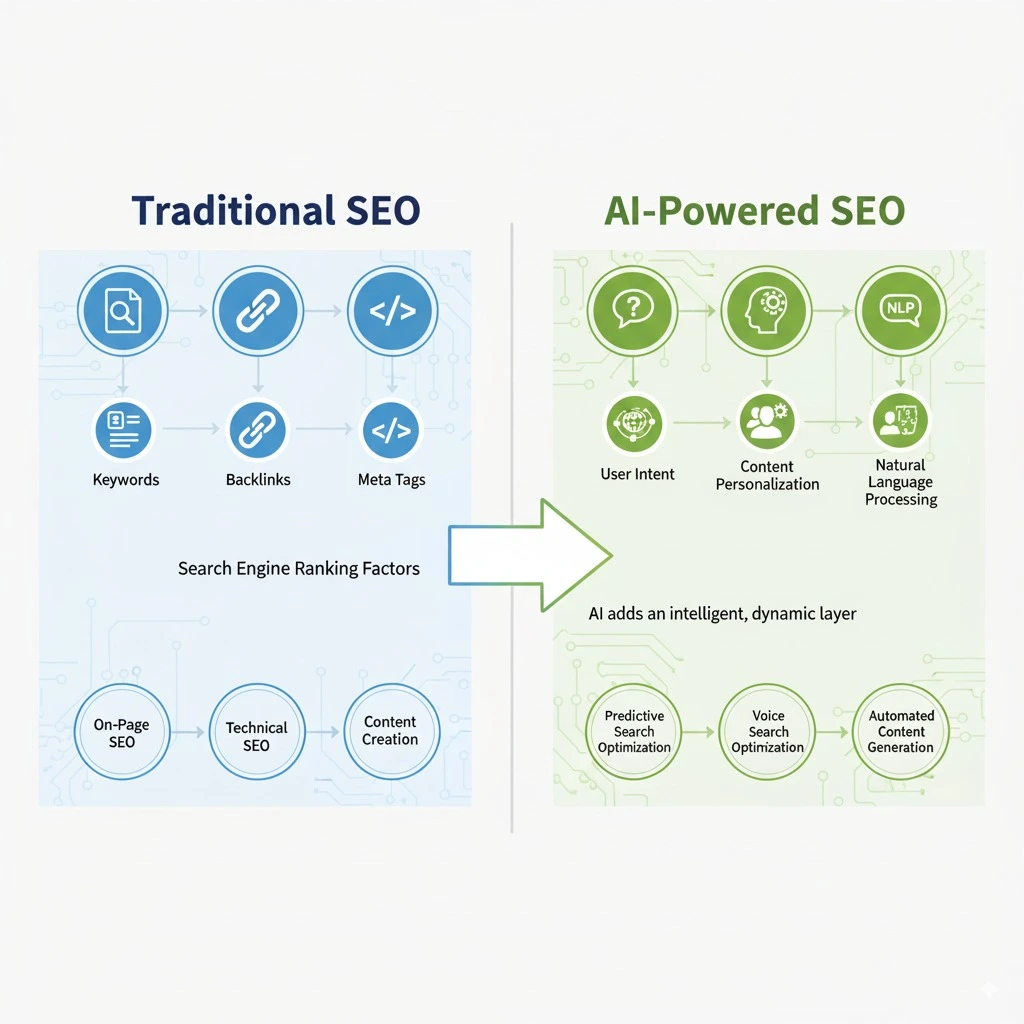
At its core, AI is transforming how search engines interpret and rank content. Historically, search engine optimization has been largely based on keyword relevance, content quality, and backlinks. While these factors remain important, AI adds another layer of complexity by focusing on user intent, content context, and content personalization.
Quick Answer: 👉 AI in SEO refers to using artificial intelligence tools to improve keyword research, content optimization, technical SEO, and link-building. Unlike traditional SEO, AI SEO focuses on user intent, semantic search, and predictive analytics, helping websites rank faster and smarter.
Generative AI and Machine Learning in SEO
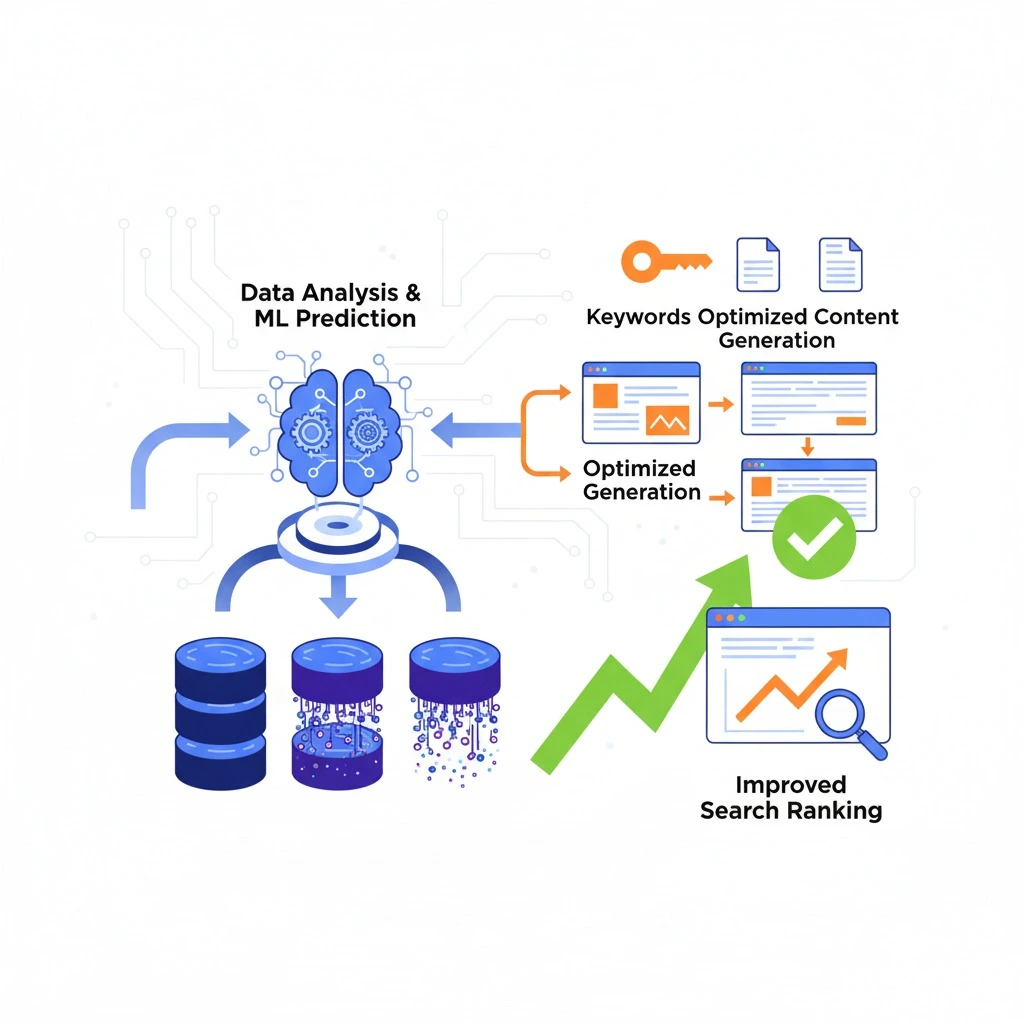
Generative AI, with its ability to generate human-like text, is changing the way we approach content creation. By analyzing massive datasets, generative AI can produce highly relevant, optimized content that aligns with search intent. On top of that, machine learning algorithms allow search engines to continuously improve and refine their ranking algorithms, ensuring that the best content rises to the top, even when it’s not explicitly keyword-focused.
Machine learning can predict search trends and adjust strategies accordingly. This makes it easier to anticipate changes in search behavior, adapt to new ranking factors, and even optimize for voice search and other future trends.
Quick Answer: 👉 Generative AI creates optimized, human-like content, while machine learning improves ranking algorithms by analyzing patterns in search behavior. Together, they allow SEO professionals to automate content creation, adapt to voice search, and predict future keyword trends.
For a more detailed breakdown of the main goals of generative AI and the core features that make it valuable for SEO, Generative Ai, Regenerative Ai, check out our dedicated guides on generative AI in SEO.
Quick Answer: 👉 Benefits of AI in SEO
- Faster keyword research and clustering
- Better content personalization with NLP
- Automated on-page optimization (titles, meta tags, readability)
- Improved link-building analysis
- Predictive insights for future trends
Preparing for AI-Driven SEO
Before diving into advanced AI techniques, it’s crucial to lay a strong foundation for your website. AI tools and algorithms are incredibly powerful, but they require clean, structured data and a well-organized website architecture to function optimally.
Website Architecture and Data Quality
The first step in preparing for AI-driven SEO is ensuring that your website architecture is user-friendly, easy to crawl, and optimized for AI analysis. Structured content, clear internal linking, and fast-loading pages are essential elements in making sure that AI tools can efficiently process and optimize your website.
Additionally, data quality plays a key role in AI’s effectiveness. AI tools rely on high-quality data to function correctly, so it’s vital to ensure your website is consistently updated, relevant, and well-maintained.
You can check our newly AI Friendly, Local city based landing page developed with the help of AI – Check SEO Company in Indore Page.
Structured Content for AI Integration
AI thrives on structured data. This means you need to create content that is easily digestible for AI systems. For example, structured content such as Schema Markup can help search engines understand your content’s context and relevance. By organizing your content with headings, bullet points, and tables, you make it more digestible for both AI and human users.
Before you apply advanced tactics, make sure your site is ready for AI-driven optimization. If you’re unsure how to get started with AI SEO tools, we’ve got a detailed guide on how to prepare your site for AI SEO.
Smarter Research with AI
One of the most profound impacts of AI in SEO is the way it transforms keyword research and intent analysis. Traditional keyword research has always been a time-consuming process, requiring careful analysis of search volume, competition, and trends. However, AI tools are revolutionizing this process by automating keyword discovery, uncovering long-tail terms, and analyzing user intent more effectively than ever before.
AI for Keyword Discovery
AI-powered tools like Google’s RankBrain or third-party solutions such as SEMrush, Ahrefs, and Surfer SEO use machine learning algorithms to predict which keywords will drive traffic and conversions. These tools analyze large datasets to identify keyword clusters, suggest related search terms, and even help you understand search intent—a crucial aspect that traditional keyword research tools often miss.
In addition to automated clustering, AI tools are becoming increasingly adept at predicting future search trends. These predictions help SEO experts stay ahead of the competition and optimize their content for future queries.
Note: Always cross check and research for the primary keywords manually. AI tools are not able to provide you the exact keywords value, Volume, Difficulty level. You have a better understanding of your niche and business. Use for deep ideas & flow generation. Remember adding keywords Keywords in your bucket or target list plays a main role don’t depend on AI for better traffic generation.
For a detailed breakdown of how to leverage AI for keyword research and automate content creation, check out our dedicated guide on AI-driven keyword research.
Optimizing Content with AI Insights
AI’s impact on on-page SEO and content personalization cannot be overstated. With advancements in natural language processing (NLP) and machine learning, AI tools are now capable of understanding content at a much deeper level than ever before. These tools analyze large datasets to suggest relevant keywords, rewrite metadata, and optimize content to meet user intent, ensuring higher rankings and engagement.
AI’s Role in On-Page Optimization
When it comes to on-page optimization, AI assists in many areas, including:
- Meta Tags and Metadata Rewriting: AI tools can analyze your content and automatically suggest or generate optimized meta titles and descriptions. These AI-driven changes ensure that metadata aligns with user search intent and includes relevant keywords, boosting the chances of your page ranking higher in search results.
- Content Enhancement for Readability: AI tools like Grammarly and Hemingway assess content for clarity and readability, helping to improve user experience and engagement. AI also ensures content aligns with target keywords and semantic relevance.
- Personalization and User Experience: AI can optimize your content to improve personalization. By analyzing user data, AI can help create dynamic content that adapts to individual preferences. This could include adjusting product recommendations or tailoring content recommendations based on past behavior.
Check the infographic chart Below For More clearer understanding of AI’s Role in On-Page Optimization

Note: Remember Sometimes AI fails to provide you the exact real time data. Always consider adding your personal experience and human brain ideas.
Tip: Create a detailed Content writing prompt > generate first detailed content draft through AI > edit manually. That’s it your content is ready to rank in top 3.
For practical tactics on using AI for on-page SEO and tips for creating AI-optimized content, be sure to check out our detailed posts on using AI for on-page SEO and creating AI-optimized content.
Technical & Advanced Applications of AI in SEO
AI isn’t just about making content more appealing; it’s also powering some of the most advanced technical aspects of SEO. From machine learning and natural language processing (NLP) to spam detection, AI is enhancing how search engines crawl, index, and rank websites.
Machine Learning and NLP in SEO
- Machine Learning: Machine learning algorithms can analyze massive datasets to predict search trends and identify ranking factors that can influence SERP positions. These algorithms are trained on historical data, enabling search engines to continually improve their ranking systems. For example, Google’s RankBrain uses machine learning to better understand complex search queries, adapting results to fit user intent.
- Natural Language Processing (NLP): NLP allows AI tools to understand the meaning behind words and phrases rather than just matching keywords. This enables more sophisticated content optimization, including semantic SEO, and helps search engines understand the context of a page. This is especially valuable for optimizing for voice search, where users tend to phrase queries conversationally.
- Spam Detection: AI can also play a crucial role in spam prevention and maintaining the quality of search results. Algorithms such as Google’s Penguin and Panda use machine learning to detect and penalize spammy or low-quality backlinks, ensuring that only authoritative and valuable content ranks in search results.
For a deeper understanding of NLP in SEO and how AI is transforming voice search strategies, refer to our specialized guides on NLP in SEO and AI-driven voice search.
Building Authority with AI Beyond Your Website
AI extends its influence beyond the pages of your website. In fact, off-page SEO strategies like link building, local SEO, and social media integration are becoming increasingly reliant on AI. By using AI tools, businesses can improve their visibility, build stronger online authority, and foster greater engagement with their audiences.
AI in Link Building
Link building has always been a critical aspect of SEO, but AI is streamlining the process. AI tools can analyze backlink profiles, identify high-authority sites for link acquisition, and even automate outreach efforts. This helps save time while ensuring that your site is acquiring valuable backlinks from reputable sources. Furthermore, AI can assess the relevance and quality of links, preventing penalties from bad links.
AI for Local SEO
For businesses aiming to improve their local SEO presence, AI can be a game changer. By analyzing local search patterns and integrating location-specific data, AI tools can help businesses optimize their websites for Google My Business and other local directories. Additionally, AI can assist in analyzing competitor data to identify gaps in your own local SEO strategy, helping you dominate the local search landscape.
Social Media Integration with AI
AI also plays a key role in blending SEO with social media strategies. By analyzing social signals such as engagement, mentions, and shares, AI can help optimize content for better performance across social platforms. Moreover, AI tools can track user sentiment, allowing businesses to tailor their SEO strategies based on how audiences react to certain content on social media.
To dive deeper into the world of AI-powered link building, local SEO, and social media optimization, explore our comprehensive posts on these topics.
Choosing the Right AI SEO Tools
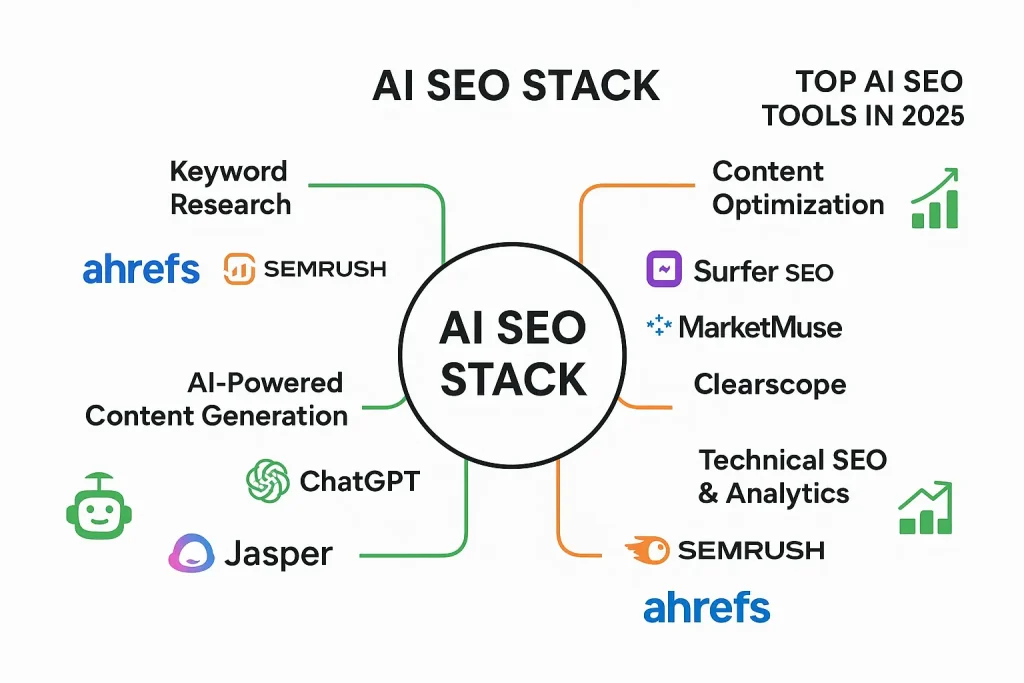
One of the most important steps in leveraging AI for SEO is choosing the right set of tools. With so many options available, it can be overwhelming to determine which ones will provide the most value for your business. See the image below for a clear breakdown of tools and their specific purposes.
Importance of a Good AI SEO Stack
Choosing the right AI SEO tools can make or break your strategy. Some AI tools excel at keyword research, while others specialize in content optimization or technical SEO. For example, tools like Surfer SEO or MarketMuse offer content optimization features, while Ahrefs and SEMrush are excellent for backlink analysis and keyword tracking.
It’s also important to consider user experience, cost-effectiveness, and ease of integration with your existing workflow. The best AI SEO tools will integrate seamlessly with your CMS, allow for easy collaboration with your team, and provide actionable insights to improve your SEO strategy.
What’s Next for AI Tools in SEO?
Looking to the future, the AI tools of 2025 and beyond will be even more advanced, offering capabilities like voice search optimization, AI-powered content generation, and hyper-targeted keyword research. Keeping an eye on these innovations will be crucial for staying ahead of the competition.
Tip: SEO Experts at our agency {SERP Monsters} uses > For content optimization – Surfer SEO & Scalenut, for real time SERP Analysis Perplexity & Google Gemini 2.0, for content outline Frase.io.
For more detailed insights into AI SEO tools and how to choose the best ones for your business, check out our in-depth breakdown of top AI SEO tools and how to select the right tools for your SEO strategy.
Challenges, Risks & Ethical Concerns in AI SEO
As with any emerging technology, AI in SEO presents significant challenges and ethical concerns that must be addressed carefully. While AI offers tremendous benefits in terms of efficiency and optimization, misuse or over-reliance on AI tools can lead to serious issues, including fairness problems and penalties from search engines.
Pitfalls of AI in SEO
- Over-automation: One of the biggest dangers in using AI for SEO is the temptation to automate every process. While AI can streamline many tasks, it’s still crucial to maintain a human touch. AI-generated content, if overused or improperly applied, may lead to thin content or misaligned user intent, resulting in poor engagement and penalties from search engines like Google.
- Keyword Stuffing: Some AI tools may prioritize keywords too aggressively, leading to keyword stuffing, which can negatively impact readability and ranking. Ensuring content quality is never compromised for the sake of optimization is vital.
- Lack of Creativity: AI is brilliant for analyzing patterns and providing recommendations, but it still lacks true creative thinking. AI-generated content might miss emotional nuance or a unique voice that truly resonates with audiences. Relying entirely on AI for content creation might lead to generic, uninspired results.
Ethical Considerations and Responsibilities
- Fairness and Bias: AI is only as good as the data it’s trained on. If AI tools are trained on biased data, they could perpetuate that bias in their recommendations, leading to unfair results. Developers must ensure that AI systems are trained on diverse, representative datasets to avoid these pitfalls.
- Transparency: As AI becomes a larger part of SEO strategies, it’s essential that marketers maintain transparency about how they use AI in content creation, keyword research, and optimization efforts. Being transparent about AI’s role helps build trust with users and search engines alike.
For an in-depth exploration of AI SEO ethical considerations and responsibilities in development, How to use tools for AI SEO optimization, check out our cluster articles on AI fairness and ethical AI practices in SEO.
Measuring the Impact of AI SEO
Implementing AI in your SEO strategy is just one part of the equation; measuring its effectiveness is equally crucial. AI can help optimize and automate numerous aspects of SEO, but it’s important to track performance and visibility to ensure the desired results are being achieved.
Tracking Performance and Visibility
- Analytics Tools: Use AI-driven analytics platforms like Google Analytics or Ahrefs to track key performance indicators (KPIs), such as organic traffic, bounce rate, and conversions. These platforms can provide insights into how well your AI-optimized content is performing compared to non-AI content.
- Visibility in Search Results: Monitoring rankings is essential for understanding how AI-driven optimization affects your visibility in search results. Tools like SEMrush and Moz can help track keyword rankings and the impact of AI on your position over time.
- User Engagement: Metrics such as click-through rates (CTR), time on page, and social shares provide valuable feedback on how users are interacting with your AI-optimized content. AI can help enhance these metrics by delivering highly relevant and personalized content.
Evaluating Outcomes Effectively
It’s crucial to assess AI’s impact holistically, taking into account both short-term gains and long-term results. The success of AI SEO can’t be fully judged by a single metric, so it’s necessary to look at the bigger picture, incorporating data from multiple sources.
Looking Ahead – The Future of AI in SEO
The future of AI in SEO holds exciting possibilities. As AI technologies evolve, we’ll see even more powerful applications in search optimization. However, with innovation comes new challenges that will need to be addressed.
What’s Next for AI in SEO?
- Predictive SEO: AI is likely to play a key role in predictive SEO, where algorithms anticipate shifts in user behavior and trends. This will allow SEO professionals to adjust their strategies proactively, ensuring their content remains relevant and competitive.
- Personalized Search Experiences: The future of SEO will see even more personalized user experiences, where AI tailors search results based on a user’s behavior, preferences, and even context (such as location or time of day).
- AI-Generated Content: AI-generated content will continue to improve, and there will likely be an increasing focus on creating highly specific content for niche audiences. While this opens up opportunities for automation, it will also necessitate ethical guidelines and quality control to prevent generic or misleading content.
- Regenerative AI for Creative SEO Solutions: Beyond automating existing tasks, regenerative AI will enable SEO professionals to create entirely new content, campaigns, and insights tailored to specific audiences. By generating blog posts, social media copy, product descriptions, and even meta content, regenerative AI will empower marketers to scale creative efforts while maintaining relevance and quality. This marks a shift from AI as an assistant to AI as a creative collaborator in SEO strategies.
Quick Answer: 👉 AI SEO vs Traditional SEO
| Feature | Traditional SEO | AI SEO (2025) |
|---|---|---|
| Keyword Research | Manual, time-consuming | Automated, intent-driven |
| Content Optimization | Based on keywords | Based on context + personalization |
| Trend Analysis | Historical data only | Predictive using machine learning |
| Technical SEO | Manual fixes | Automated issue detection & solutions |
| User Experience | Generic | Personalized & adaptive |
Real Case Studies of AI SEO Success
Real-world examples of AI SEO applications are becoming more common. For instance, businesses using AI-powered content optimization tools like MarketMuse or Surfer SEO have seen significant improvements in keyword rankings, organic traffic, and conversion rates. Similarly, companies utilizing AI-driven keyword research have uncovered long-tail keywords that would have been otherwise missed through traditional methods.
For a closer look at AI’s future in SEO and to explore a real AI SEO success story, check out our case study on AI-driven SEO and our exploration of the future challenges of AI in SEO.
Final Words
In this comprehensive guide, we’ve journeyed through the world of AI in SEO, from understanding the basics of AI-driven optimization to exploring its future potential. We’ve covered everything from content optimization and technical SEO to ethical considerations and advanced applications like link building and social media integration.
As you embark on integrating AI into your SEO strategies, remember that the key to success lies in combining AI’s power with human oversight, ensuring that your content remains creative, relevant, and ethically sound.
Ready to take your SEO strategy to the next level? Dive into our specialized guides on keyword research, content optimization, and AI-powered SEO tools for detailed tactics to help you succeed in an AI-driven SEO world.
👉 Explore our cluster series for in-depth tactics on keyword research, content optimization, and AI-powered SEO tools.
Announcement:
After this series, we are launching a new series where we will share real-time case studies, week-by-week results, and outputs. This series addresses one of the most frequently asked—and most misunderstood—questions among SEOs: “Does AI content really rank?”
To answer this once and for all, SERP Monsters is preparing a 15-week series where we will test AI-generated content, fully humanized content, and AI + human hybrid content to provide real, genuine, and transparent results.
Stay tuned! We will soon announce the series name and start date. Trust us—this is going to be a mind-blowing series. We’re doing something that has never been done before on any SEO website in history.
Each week, we will provide real-time screenshots, results, and fully transparent data—just for you and fellow SEOs—to finally clear the confusion around AI content and its ranking potential.As we all know, Google prioritizes user-first content, so we will keep this principle in mind as we start the series. For complete details, stay tuned—we will soon publish the full series flow in our News section.
Question: What is AI SEO?
Answer: AI SEO is the practice of using artificial intelligence tools like RankBrain, ChatGPT, and Surfer SEO to optimize websites for search. It helps automate keyword research, content writing, and SERP analysis.
Question: Can AI-generated content rank on Google?
Answer: Yes, AI-generated content can rank, but only if it is edited for accuracy, quality, and user-first value. Google rewards helpful content, regardless of whether it’s AI-assisted or human-written.
Question: Which are the best AI SEO tools in 2025?
Answer: Top AI SEO tools include:
-
Surfer SEO (content optimization)
-
Scalenut (AI writing + keyword clustering)
-
MarketMuse (topic modeling)
-
Frase.io (content briefs)
-
Perplexity + Google Gemini 2.0 (SERP analysis)
Question: What are the risks of AI SEO?
Answer:
-
Over-automation leading to thin content
-
Keyword stuffing by aggressive AI prompts
-
Lack of creativity or unique brand voice
-
Risk of Google penalties for spammy AI content
👉 “AI SEO isn’t about replacing humans—it’s about combining machine efficiency with human creativity. Start with AI-driven keyword research, optimize your content with personalization, and track real-time results to stay ahead in 2025.”